
Meeting the Sutras: The Philosophy Behind My Approach As a Guide
When I tell people I’m a “yoga-centered” life coach or guide, they mostly think that what I do with clients is private yoga: one-on-one exercises, stretches, and maybe a little breathing. But what I actually do is much more holistic.
While it’s true that I have a “yoga” focus, when I say “yoga” I am referring to the 8-limbed path as described in the Yoga Sutras. The Yoga Sutras, attributed to the sage Patanjali, were compiled around 200 CE and distill much older yogic teachings into a concise guide for understanding the mind and cultivating spiritual discipline. The Sutras outline the philosophy and practice of yoga as a path to inner clarity, steadiness, and freedom. They offer simple but profound guidance on how the mind works and how we can cultivate a more peaceful, intentional way of living.
Although the exact origins of the Sutras are somewhat mysterious—some historians place them a couple of centuries before the Common Era, while others date them closer to 200 CE—what’s clear is that they grew out of a long oral tradition. The verses themselves are incredibly brief, almost threadlike, which is fitting since the word “sutra” refers to something stitched or strung together. Their concise nature reflects a time when teachings were memorized, chanted, and passed from teacher to student, with meaning unfolding through interpretation rather than through lengthy explanation.
There’s also some debate about whether Patanjali was a single author, a collective voice, or even a symbolic name for a lineage of teachers. But ultimately, the mystery around the author matters far less than the enduring wisdom the Sutras offer. They invite us to understand ourselves more deeply, to see how our minds operate, and to recognize the practices that help us move toward greater steadiness and freedom.
In the next few blog posts, I will cover the basics of the 8-limbed path as outlined by Patanjali’s Sutras.
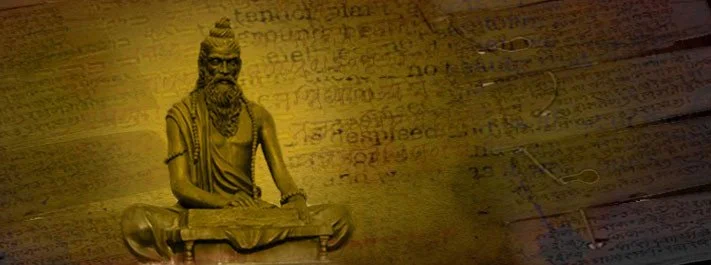
The sage Patanjali, often credited with being the author of the Sutras.